How can we move beyond conventional web interaction?
I have always wondered whether a digital product, even a simple website, could inhabit a role beyond what we are accustomed to.
Typically, we enter a digital space to consume information: we skim pages, catch only the largest headlines, and offer fragments of an increasingly contested attention span. With The Wild Silence project, I wanted to upend this behavior, questioning every rule we usually try to optimize: speed, visual oversimplification, and the almost exclusive dominance of sight.
I designed a space that serves as an praise of slowness. A place to submerge both sight and hearing, born to explore a theme deeply close to my heart: the progressive disappearance of our planet’s living voice.
A choreography of information
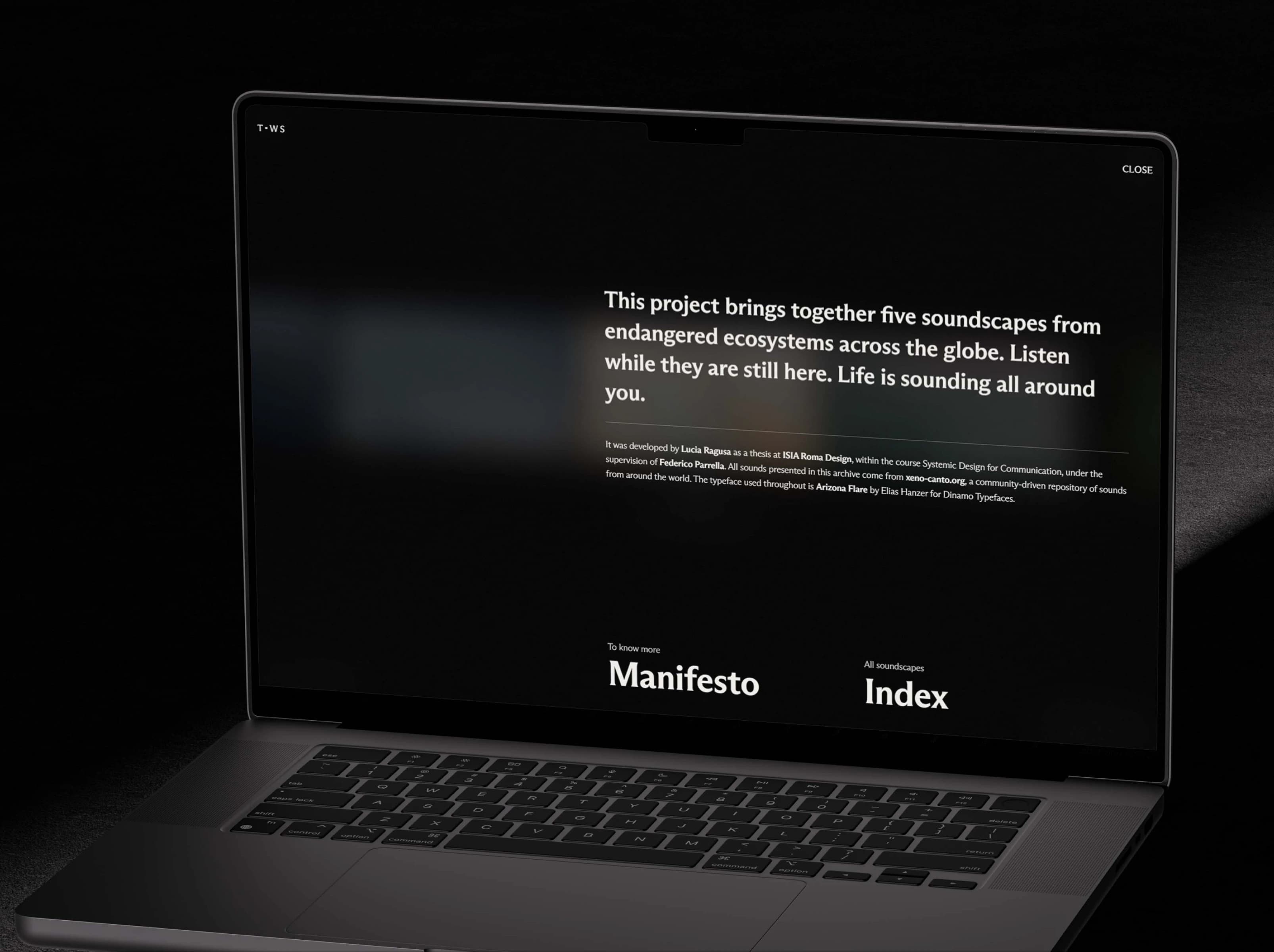
This project began as a digital and sensory memorial designed to collect, archive, and transform into an experience the "voices" of fragile ecosystems whose soundscapes are fading away. Grounded in scientific evidence of declining acoustic biodiversity, I explored how immersive digital storytelling can give form to an intangible natural heritage, turning the sense of loss into a perceptual and witnessing experience.
For me, it was an opportunity to explore a different way of communicating through digital media. I took the time to curate every detail: the subtle delays upon scrolling, the hover interactions, the quiet cadence of transitions. Every choice contributes to the composition of a contemplative space, shaping what feels like a digital choreography.
Synesthesia and abstraction
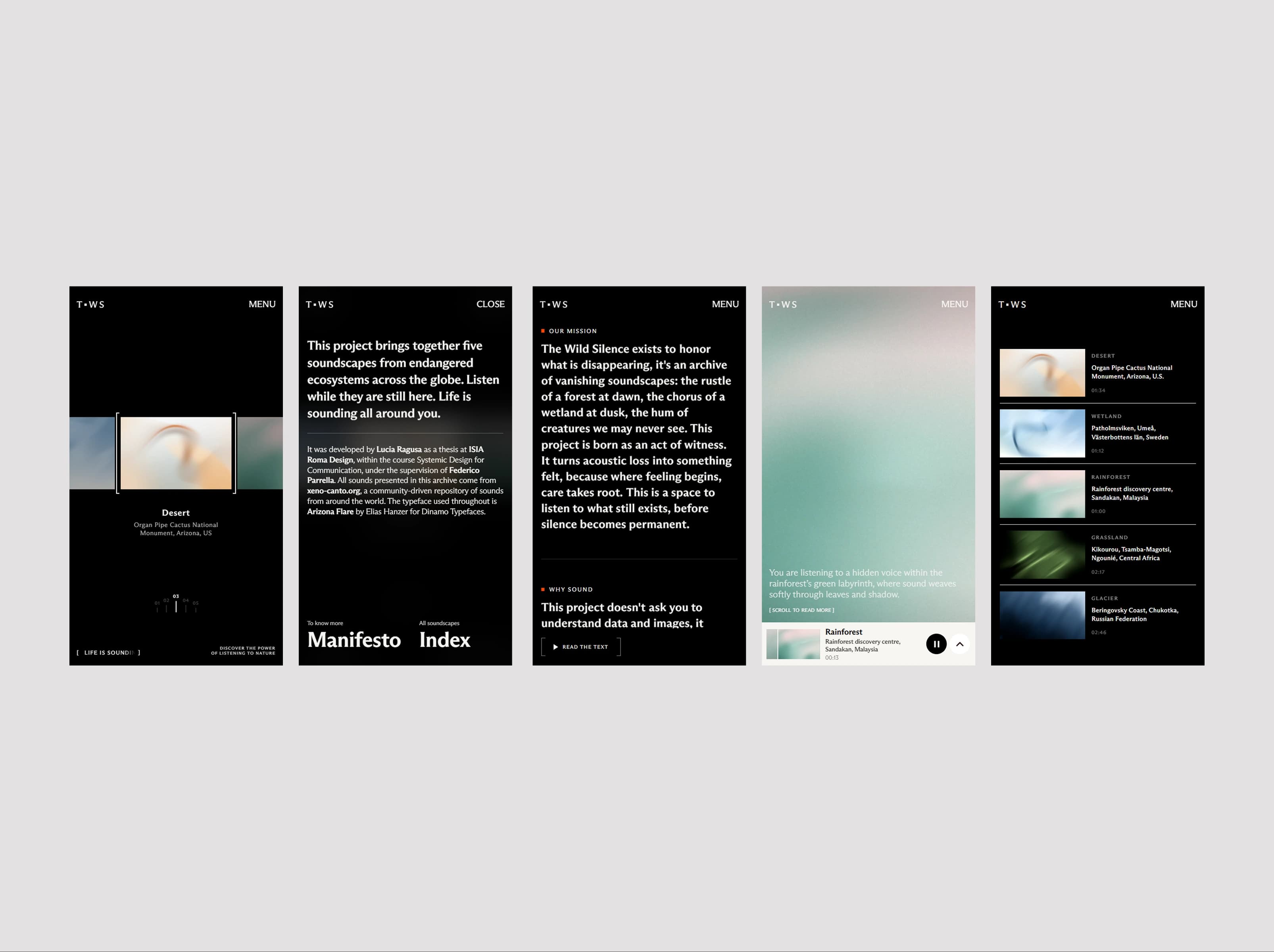
To represent the diversity of the planet, I selected five field recordings from distinct environments (from desert to glacier, wetlands to rainforest).
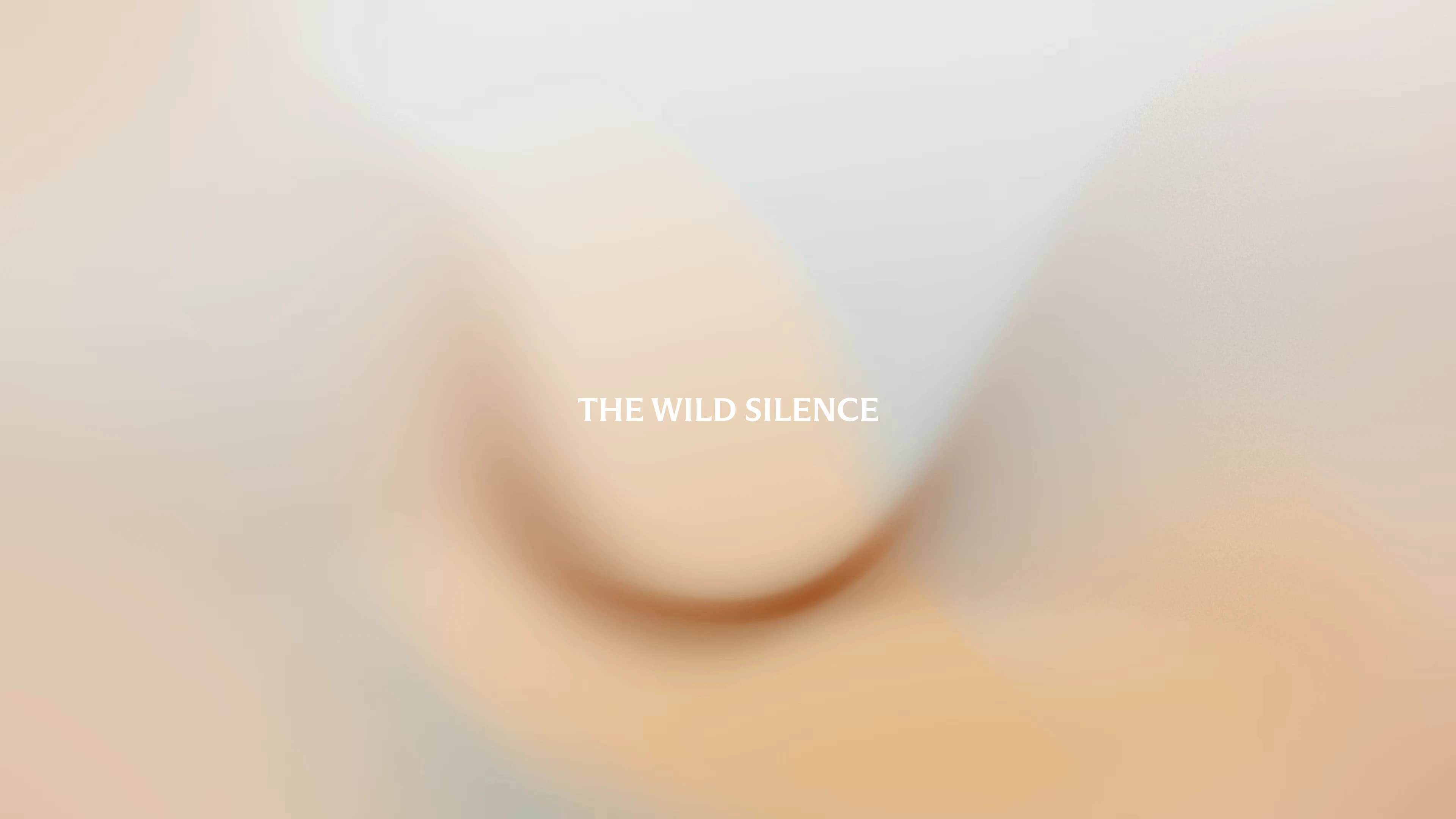
Visually, I chose to move away from literal or photographic representations in favor of an abstract visual language. Colors, fluid shapes, and movements were calibrated to evoke the atmosphere and "emotional temperature" of each landscape, preserving a poetic resonance that a realistic image might have flattened.
The interface remains intentionally sparse to eliminate distraction. Interactions are few and measured: the goal is not to entertain, but to allow the visuals to gently carry the visitor into the soundscape.
Listening as an act of care
The screen ceases to be a functional tool and becomes a contemplative threshold.
A digital project cannot halt the degradation of ecosystems, nor can it solve the biodiversity crisis. What it can offer, however, is a mode of attention: an invitation to encounter ecological loss through emotional resonance and quiet presence.
In a hyper-accelerated world, The Wild Silence offers an idea both simple and radical: that listening can be, above all else, an act of care.